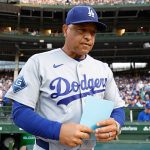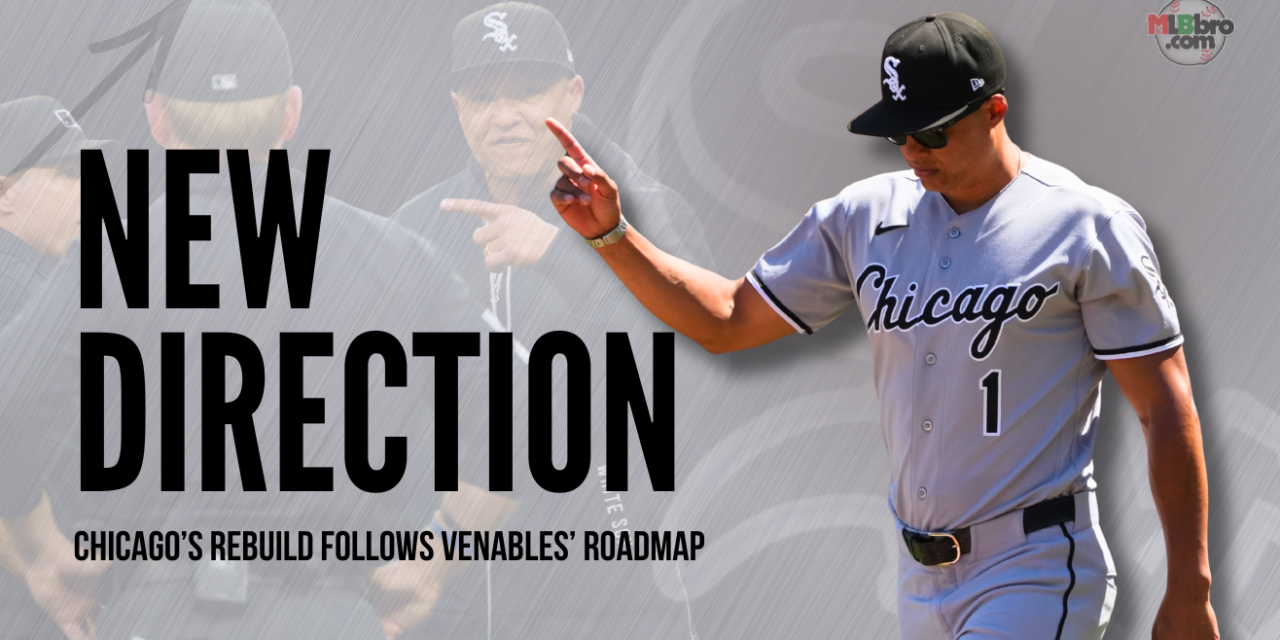
In a recent sit-down with MLBbro.com at Citizens Bank Park, White Sox manager Will Venable answered a wide range of topics from his team’s surprising start in 2026 to the biggest lesson he learned from his father, MLBbro Max Venable.
MLBbro.com: After June 5, 2025, the White Sox were 20-43. After Tuesday’s 6-5 win over the Atlanta Braves, the team is 35-31. What turned things around for this team?
Will Venable: Starting last year, we got young guys in our Minor League system that came up to the big leagues and performed very well. They started, what I would say, the foundation of our group. They started creating the identity of our club – how we were going to go about our business, the effort we were going to play with. It very much felt like, toward the end of last season, that we created some kind of momentum that we could put our finger on.
Through the offseason, these guys continued to work out together. They stayed connected. Some of them were living together. We added some really good pieces – Seranthony Domínguez, Austin Hays, Anthony Kay, and Munetaka Murakami. Just our overall talent level was raised. Then you bring in Sam Antonacci. So you just bring in better players. The thing that has been cool is that they have all contributed to the core identity of the team. They all bought in. They are all connected. They are playing for each other. They play hard. It’s a really good thing they have created.
MLBbro.com: I also noticed that your losses have moral victories. For example, on Friday against the Phillies, the team didn’t give up after being down by a significant number of runs. The White Sox ended up tying the game in the loss that day. Would you agree with the moral victories?
Venable: I would agree with it. While we wouldn’t call them moral victories, it’s just how we play. What’s cool is that’s the standard that these guys have set. The way that you get there is that you have to get guys committed to each other. They are also good at their jobs. One thing that they are good at is slugging. I think when you have that, you always feel like you are in the game. All of that together creates this kind of collective spirit in which they never give up.
(Friday) was a great example. You take the lead, then you kind of get kicked in the teeth after you give it back. Our team then kept going and chipping away. Yeah, you are bummed that you lost the game, but you go, “Wow, another day in which these guys showed up and continued to play for nine innings.”
MLBbro.com: What was the game that made you say, “We are going to be all right?”
Venable: That’s a good question. I feel there have been so many of these games. The first week of the season was not good. It was a disaster. We came out of that. I can’t even remember because there have been so many games in which I felt good about us consecutively from game 8 on. So I don’t know if there is one game that I felt like that. … Day in and day out, they continue to prove this is who they are.
MLBbro.com: What has been the most pleasant surprise this year?
Venable: I would have to say, on an individual basis, Mune (Murakami). There was a rough expectation of what he might do on the field. The most pleasant surprise for me has been his impact in the clubhouse. From Day 1, he has engaged with his teammates and really given them a ton of energy, a ton of himself to his teammates, which is what they do, too. To watch them all, do that, where they are playing for each other, giving energy to each other, has been the most pleasant surprise, and it starts with Mune.
MLBbro.com: I remember after the White Sox signed Mune, almost everybody poo-pooed the deal because of his enormous strikeouts in Japan. What did the team see that we didn’t see?
Venable: I was not part of the recruiting process or evaluating him coming in. I jumped on a Zoom a couple of days before we signed him to just introduce myself. I think what (the front office) saw the raw ability. As they are doing their background work on the human being, he checked that box.
I can only speak for what I’ve seen since we acquired hi,m and that is really high aptitude and adjustability to come to a new country, where he doesn’t speak the language. We are asking him to do things differently than he is used to, like training methods. He has just shown incredible adjustability early, which gave me confidence that he was going to have the aptitude to make swing adjustments to whatever he needed to do.
MLBbro.com: People talk about analytics when it comes to Mune, but I don’t think people looked at his heart. Would you agree with that?
Venable: I think that is part of his profile – I don’t want to say that was overlooked, but I know we appreciate it now. I know how impactful it has been with our club and our identity. He is a huge part of it, and that really comes down to him as a person.
MLBbro.com: When do you expect him to come back from his hamstring injury?
Venable: He is a week into this thing. He received a PRP (platelet-rich plasma) shot in his hamstring. From there, it’s a couple of days of not doing anything. The last few days, he has been ramping up some. He has had treatment. The initial outlook was four to six weeks, so that put us at five weeks away. But we really take this day by day. I want to make sure that he will get strong and get that hamstring healed up. Hopefully, it’s on the shorter side of that. You never know with these things.
MLBbro.com: Everybody talks about Mune. Tell me about the other players you want people to know about?
Venable: Miguel Vargas is someone in the same light. He is a really high-character guy. He is also a high performer. You know what? You could go through every single guy on our team and say the same thing. They are performing well on the field, and the contributions they are making in the clubhouse are elite.
MLBbro.com: The one thing I admire about you is how you use your bench. I noticed that guys like Randal Grichuk are seeing playing time and being productive for you. How did you learn to use your bench properly?
Venable: I was the beneficiary of being around good managers. I played for Buddy Black, Dave Roberts and Jeff Bannister. I was a coach under Joe Madden, Alex Cora, and Bruce Bochy. So, I saw, especially as a coach, really good strategies and was able to pick up some lessons from them. The last stop for me was in Texas and being around Boch. It really made a difference. He was inclusive of decisions and processes. I learned a lot there.
… You have to have players who understand their roles and are willing to own those roles. That’s something that does not happen with every club. That’s something that happens here. I took Grichuck out of the game (on Friday) after he hit two home runs. I didn’t want to do that, but it was the right thing to do. He was totally fine with it because he understands his role. When you have that, it makes it a lot easier to do the right thing and do anything you can to get an edge.
MLBbro.com: I can’t leave without asking you about your dad, Max. How does he feel about what you are doing now?
Venable: I know he is really proud of me. That makes me so happy. When I was a kid, I always believed that I could achieve great things in baseball because of what I watched him achieve. The support I had from him along the way, the advice that I’ve gotten from him, the lessons that I’ve learned from him, it was really unique. Because when I was a kid growing up and playing baseball, he wasn’t around because he was playing or coaching. He helped and coached me through life, obviously, but from a distance during the baseball season. Then when I played pro ball, I had him as a hitting coach in the Minor Leagues. Then it flipped. That’s when I received some baseball coaching from my dad. He has continued to be in my corner. I can pick up the phone and get advice from him, tap into his experiences and words of wisdom. There is no one that has impacted me more than him.
MLBbro.com: What is the biggest advice he ever gave you?
Venable: The game is hard and be nice to yourself. Really just focus on the things you can control. He had to work hard to instill that in me. He saw me fail in A ball and throw my helmet. He really had to coach me up on that part. That’s the advice that really sticks out.